Showing posts with label history. Show all posts

Tuesday, August 29, 2017

an old anchor

Oct 10, 1907 two schooners wrecked here last Monday night, the Erie Stewart and Ontario
crew get two boats from island dock, reach lighthouse
In 1910, the ONTARIO was running before a strong gale, she had a deck-load of bailed hay, straw and shanty supplies for the northern camps and was heading for the shelter or Chantry Island harbour of refuge just below the town of Southampton. Ahead of her was the schooner ERIE STEWART, also running for shelter. It was dark and blowing and Capt Granville could not see what happened, but the ERIE STEWART poked her Jibboom through the little range light on the end of the pier, and knocked the light-house down, all Capt. Granville knew was he could not pick up his range to get under the shelter of Chantry Island, so he tried to get the ONTARIO into the shelter of the mouth of the Saugeen River, around which Southampton clusters. The schooner was under small sail at the time, only the staysail being set, and that being "squatted" or lowered somewhat so as to reduce its area. On nearing the river mouth the wind shifted and a gust came off shore. The ONTARIO lost headway and piled up in the breakers on the shore south of the present piers, and that was where her anchor was recovered in the dredging operations. 
(from the Toronto Telegram)

Looking out over Lake Huron
the range light at Southampton
Chantry Island Lighthouse
approximately 1km from  the shore of Southampton


a little maritime history for Tuesday's Treasures

Sunday, January 11, 2015

John A

The theme of famous people, portraits was chosen specifically for this date because it is     Sir John A Macdonald's 200th birthday. 
Hot off the press is the stamp issued (unusually, on a Sunday) today in his honour. (my post office outlet had no fdc, sadly)

We don't do much in the way of celebrating our leaders, so there isn't a whole lot happening to commemorate our first Prime Minister and Father of Confederation. There may be a glass or two - or three - raised in his honour at some point. He did, after all, really, really like his drink. Until Rob Ford came along, John A was our most famous politician known for his drunken stupors. Though, it could be argued that most men of the time drank a lot, the fact that he could also govern the country and accomplish as much as he did while being inebriated shows a certain strength. He was PM for 19 years, oversaw Confederation and the building of the Canadian-Pacific Railway, and created the North West Mounted Police. He also enjoyed bribery and patronage to get his way, was a bit neglectful and possibly a racist.
John Alexander Macdonald was born in Glasgow though exactly where is in dispute (and as a result plans to erect a plaque have been stalled for a long time). He had a rather unhappy personal life, which could go a ways to explain his penchant for alcohol. The family emigrated to Upper Canada in 1820 and by age 15 John was working to support his mother and sisters. A brother had died from a blow to the head by a servant who was to have been looking after the boys. His first wife, Isabella, was an invalid for many years and their first child died in infancy. Another child with his second wife, Agnes, suffered from hydrocephalus and never walked.

This stamp is a 1973 definitive. John A was a caricaturist's dream. In this case the designer was David Annesley. 
(yes, he is always called John A, never MacDonald)


Today has warmed up to a mild and pleasant -1C, but I may still warm my insides with a shot of whisky and toast the old geezer.

Sunday, September 8, 2013

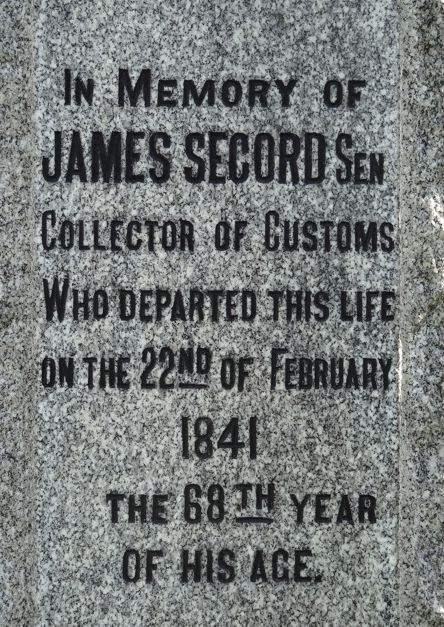
grave post - Laura Secord

This unassuming farm house in the (now very sleepy) town of Queenston is where Laura and James Secord lived from 1803-35 and where she raised her seven children (one son and six daughters). During the War of 1812, the home was taken over by the Americans who had added to her household demands by billeting three soldiers with the family. 


The American soldiers let down their guard and discussed a planned attack. James had been seriously injured during the Battle of Queenston Heights early on in the war and Laura was still nursing him back to health. I'm sure those soldiers never expected Laura to make her way through 20 miles of rough and dangerous woods to warn the British of their plan. But she did. Her heroic deed was not recognized until 1860 when the Prince of Wales made a visit and learned of her feat. Thereafter she became the celebrated heroine of many tales, poems, drama and legends. There was story about a cow being dragged along on the journey but that has been discounted as completely impractical. After the war, the comfortably well off Secords were reduced to poverty for several years. James eventually got a position as a registrar, then judge in Niagara and finally as a customs inspector in Chippawa. Since that was about 11 mi, or 18 km, away, they sold their house and moved. After he died in 1841, Laura was again left destitute and opened her cottage as a school for the Chippawa Natives to make ends meet.


There were no portraits of Laura, so we really don't know what she looked like, but there are two busts of her - one at Lundy's Lane in Niagara Falls and another in Ottawa near the NationalWar Memorial. Both James and Laura are buried at Drummond Hill Cemetery.

You can read all about her life here at Upper Canada History and also here
CemeterySunday and TaphophileTragics

Laura Secord - the first part

The third issue in the Canadian folklore series, issued on September 8, 1992, focuses on Canadian heroes whose feats have taken on legendary proportions. Everyone who buys chocolates in Canada is familiar with the name "Laura Secord". But not everyone is aware that there was a real Canadian heroine named Laura Secord. Born in 1775 in Great Barrington, Massachusetts, Laura Ingersoll moved to Canada with her family in 1795. She met and married local Queenston merchant James Secord in 1798. But the good times began to fade with the War of 1812 between the U.S. and Great Britain. On June 21, 1813, both her home and town were overtaken by American invaders. Overhearing the enemy's battle strategy, she decided she had to warn the British garrison at Beaver Dams. Since the roads would be too dangerous, she undertook a 20-mile trek by swamp, escarpment and woods. Following many near-fatal mishaps, she encountered a band of Caughnawaga Indians who guided her the rest of the way. Reaching the garrison with her story, the Americans surrendered after the Indians ambushed them on June 24. (Canadian Postal Archives)
(sorry about the small font...)
Designed by Ralph Tibbles 
Based on illustrations by Deborah Drew-Brook 
Based on illustrations by Allan Cormack


This 2013 issue was designed by Susan Scott who "consciously tried to avoid the 'sentimental' look of the earlier stamp in devising the latest postal tribute to Secord" and Montreal illustrator Suzanne Durenceau
There are no photographs of Laura Secord save for one taken when she was nearly 90 years of age, so the designers used photos of some of Laura's daughters who had similar facial features as inspiration and found a model to pose. Canada Post is pretty strict about the models used for stamps, so this mystery woman (who apparently is from Montreal) will always remain anonymous.
The second part on Laura Secord is under cemeteries tab. (this tabbing idea is a work in progress - does anyone have hints on how to transfer posts to new tab?)
SundayStamps

Tuesday, November 20, 2012

grave post - White


In Memory of
John White Esq
Attorney General 
of
Upper Canada
died at York
4 January, 1800


Buried in St James Cemetery in Toronto
What this gravestone doesn't mention is that John White was killed in a duel

Born in 1761 in Middlesex, England, Mr White was educated at the Inner Temple in London. After being called to the bar in 1785, he had an unsuccessful law practice in Jamaica before returning to England. Still unsuccessful, he was contemplating a new career as a clergyman when a friend from law school recommended his appointment as attorney general in Upper Canada. In 1792 he was in Kingston for a short time until the government moved to Niagara-on-the-Lake (then known as Newark) then on to York (Toronto) in 1797 when the government again changed locations. By then his wife, Marianne, had joined him with their three children, but it was not a successful reunion and she returned to England with their daughter in 1799. But not before getting into a catfight with a certain Mrs Small. 


Mrs Small did not think much of the 'notoriously quarrelsome' Mrs White and snubbed her at an assembly. Mrs White apparently did not think much of Mrs Small's virtue and said as much to a Mr Smith. Perhaps she did not like that Mrs Small's virtue did not stop her from having a fling with Mr White. She already did not think much of Mr White himself, as they had been estranged for several years before she met up with him in York. The scandalous remarks got out into society, as these things do in a small provincial town. Mr Small now did not think much of Mr White who could not control his wife's words (or apparently his own wife's virtue) and challenged him to a duel. Mr Small was charged with murder after Mr White succumbed to his wounds 36 hours after being shot, but was acquitted.
In the end, Mr White would be remembered more for his death than his career, which included the formation of the Law Society of Upper Canada, and Mr Small's reputation would be ruined and his career overshadowed by the duel.

see more notorious graves at Taphophile Tragics at its new home, hosted by Marble Towns

Friday, November 9, 2012

Peace

a "colourpicture" linen postcard of the Peace Tower
as bonus, we get a Mountie in scarlet!

The Peace Tower is a bell and clock tower that sits in the Centre Block of the Parliament Buildings. 
It is also home to the Memorial Chamber directly above the porte-cochere, with stained glass windows and various other features illustrating Canada's war record such as the brass plates made from spent shell casings found on battlefields with the name of each of Canada's major conflicts during the First World War. The stone walls were originally to have been inscribed with the names of all Canada's servicemen and women who had died during the First World War but without enough space for all 66,000 names, it was later decided to place Books of Remembrance there instead.


Saturday, March 10, 2012

Sunday Stamps

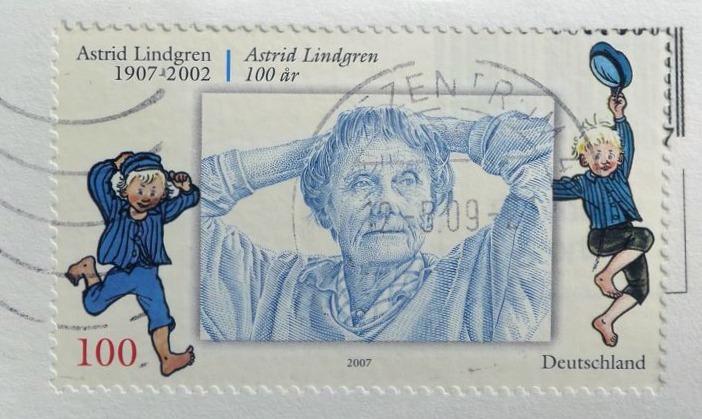
First up, we have Astrid Lindgren, a Swedish author of children's books, among them, Pippi Longstocking.  
Though her stories for children were loved, her attitude towards adultery) which was reflected in her writings) was not so much. In her personal life, after an affair with her editor, she gave birth to a child out of wedlock. Until she was able to afford to take care of him, he was raised in a foster home where she regularly visited on weekends. It would seem that after declining marriage from the child's father, he declined support for the child. She would later marry her boss. Still, she was a advocate for children's and animal rights and against corporal punishment and was bestowed an award "...For her commitment to justice, non-violence and understanding of minorities as well as her love and caring for nature." 

Then there is American author and abolitionist Harriet Beecher Stowe, whose most recognized work is possibly Uncle Tom's Cabin written in 1852, but she also wrote numerous other novels, travel memoirs as well as articles and letters.
Legend has it that upon meeting President Lincoln he was to have said to her "so you are the little woman who wrote the book that started this great [civil] war", such was the polarizing effect of her writing among readers in the North and the South. It all started when she wrote to a newspaper saying she wanted to write a story about the problem of slavery, "I feel now that the time is come when even a woman or a child who can speak a word for freedom and humanity is bound to speak... I hope every woman who can write will not be silent."

Then there is someone perhaps a little less famous but by no means less influential in the lives of average Americans. Mary Lasker was a philanthropist and health advocate whose Lasker Award is considered the most prestigious medical research award one can receive. She supported National Health Insurance under President Truman - it failed. She then decided to fund medical research as a way to promote public health. She was also the president of the precursor to Planned Parenthood and she and her husband were instrumental in making the American Cancer Society the powerhouse that it is today. Ironically, her husband was one of the advertising executives who came up with the "Lucky Strikes Means Fine Tobacco" slogan for the cigarette company before the dangerous effects of tobacco became known.

Finally, we have the unnamed Women in  Military Service

See more Women in Stamps for March's Women's History Month in the US and the UK
(Canada celebrates in October)
by visiting Viridian's Postcard Blog

Monday, January 9, 2012

grave post #2


The St Andrew's Society of Toronto was officially formed in 1836 just two years after the City of Toronto was established and is the only one of the Scottish societies from that era to be still active today. 
Their original mandate was to help recently arrived Scots to get on their feet in their new home, though now their support is through grants and support of various charities.


This cairn was built in 1890 after a large burial plot was bought in Mt Pleasant Cemetery.
and a bonus - the resident deer takes a stroll behind the cairn 
If anyone else has a fascination with such grave subjects, head over to Taphophile Tragics

Monday, April 18, 2011

Monday AMuse

The United Kingdom Explained from C. G. P. Grey on Vimeo.

there is an option to read the script - which you may need to take advantage of... just saying.

Friday, May 14, 2010

the hill - part deux

There was a devastating fire on a cold winter's night in February 1916 in the Centre Block of the Parliament Buildings.

Original Centre Block
Imagine what went through everyones mind, with the young (barely 50 years) country embroiled in the first world war. But it turned out it was not part of anything as sinister as enemy sabotage. It is believed the fire was most likely the cause of careless smoking in the Senate Reading Room.
Firemen Spray Water
The only part of the building to survive was the Library of Parliament (designed by Thomas Fuller) at the back of the building due to someone taking the time to close the big iron doors as he was fleeing.
Library After Fire
Library Windows after Re-opening 2006
In spite of the war, rebuilding took place almost immediately. As you can see from the top archival photo, the new building was built in a more modern Gothic Revival while the original was a High Victorian Gothic Revival (and as such much more ornate). There are 25 different types of stone and marble used in the construction with much of the exterior done in sandstone from a local quarry.
Parliament Fresh Start

Time and the weather has not been kind and a massive renovation project has been underway since 2002 on all three buildings which is expected to take until 2025.
The stone from the gates are slowly being cleaned and restored to their original glory.

this bell was taken from the ruins
of the clock tower destroyed by fire
February 3, 1916
"The fire raced fiercely for hours. the main tower was not touched until about 11pm, and one of the most pathetic incidents of the night, which moved the spectators, was the striking of the midnight hour by the old tower clock. There seemed almost a human touch as its familiar tones boomed out from the mass of flames"

archival photos from CanadaOnline
then
now

Wednesday, May 12, 2010

the Hill - part un

Going for a walk - or a drive - with someone who loves to take pictures can be a bit annoying, I know. I try to curtail my snapping habits when I am with other people but it is difficult and sometimes I just have to lag behind, or pull a u-turn. It doesn't help that I have interests that may not mesh with my companions interests. Sometimes they smile indulgently.

One of my interests is architecture.

So how can one interested in architecture not be awed by the sight of the Parliament Buildings?

I won't bore you with details. Basically there are three buildings high up on a hill on a piece of land that overlooks the Ottawa River. They are conveniently and simply called the Centre Block (the one that has the Peace Tower), East Block and West Block.

They were built after Queen Victoria stuck a pin on a map and thus made her decision to have Ottawa the capital of the new "Province of Canada". High Victorian Gothic Revival was the design of choice. Unfortunately, the Centre Block burned down in 1916 and was rebuilt not quite in the same style, but still distinctively in a sympathetic Gothic.

Each of the buildings is overloaded with pointed arches, spires with crockets, lancet windows, and, as a whole, are considered to be one of the most important examples of Gothic Revival style anywhere in the world.

There is also a requisite gargoyle, or two.

Thursday, May 28, 2009

a reality show before television

In a stunning display of insensitivity and greed, the government of the day declared the parents of the Annette, Cecile, Emilie, Marie, and Yvonne unfit to care for them and they were made wards of the crown. The official reason was to "ensure their survival". The girls, who were born 75 years ago today made medical history as the first identical quintuplets to survive infancy. They are also the only set of five identical females ever recorded. They were born in a very small farmhouse to Elzire and Oliva Dionne 2 months prematurely. The five girls were so small they all fit into a wicker laundry basket and were kept warmed by the open door of the kitchen stove and hot water bottles. They also were given a special formula of cow's milk, boiled water, two spoonfuls of corn syrup, and one or two drops of rum for stimulant.


By the time they had survived four months, they government took the girls from their poor family (and their father, who had allegedly already considered exhibiting them for money) and guardianship of the girls was given to Dr Dafoe (who attended their birth). A specially designed hospital across the street from the family farm was built where they spent the next nine years of their lives, seeing nothing of the outside world and little of their parents who were made to feel unwelcome. They were tested and studied and examined, with meticulous records kept of everything. Once the government realized this could be a tourist attraction where they could make money there was no stopping the number of souvenirs, endorsements, and apparently tourists. More people came to visit what became known as 'Quintland' than visited Niagara Falls. The girls were put on display for 30 minutes two or three times a day as they were brought to a special 'play area' where tourists could watch them through a one way screen. Even in the Depression, 6,000 tourists a day made their way to this little Northern Ontario town. Souvenirs with their identical likeness (they were always dressed the same, why would anyone want to see identical quintuplets not dressed identically?) included everything from postcards, calendars, dolls, spoons, plates, cups, plaques, to special chocolate bars. Anything that could have their picture imprinted on it was and sales of Quaker Oats, condensed milk, toothpaste, corn syrup, soared as people bought into the cuteness factor and aided the economy and the exploitation.

A whole new Quint industry sprang up and provided employment for thousands. The Quints helped millions of people feel happy during the depression and forget the hunger and unemployment for a moment. - from the website of the Dionne Quints Museum North Bay District Chamber of Commerce


All was not rosy when they were eventually returned to their family. The girls felt alienated from their five older siblings and their father continued to use them as a source of income.

Emilie died at age 20 of an epileptic seizure, Marie died at age 35 of a blood clot, and Yvonne died in 2001 at age 67 of cancer. The two remaining sisters, Annette and Cecile live in Montreal. The girls all left home when they turned 18 and had little contact with their parents after that.


"We hope your children receive more respect than we did. Their fate should be no different from that of other children," Annette, Cecile and Yvonne Dionne wrote in an open letter published in Time magazine (1997) to the McCaughey's after the birth of their septuplets. "Multiple births should not be confused with entertainment, nor should they be an opportunity to sell products."

Jon and Kate take note.

Happy 75th birthday to Annette and Cecile.

See here for more Archival pictures
For more on the Quints story including video footage see here